Where to go
4 hours9 stops

Bukharain 4 hours

Bukhara is the “pearl of the Silk Road”, and its historic centre has been a UNESCO World Heritage Site since 1993. The old town is compact and easy to explore on foot: in four hours you will walk from Lyabi-Hauz to the Ark fortress, step under the domes of medieval trading arcades, and see the famous Kalyan minaret and mosques of different eras.

Po-i-Kalyan SquarePo-i-Kalyan Square

The route9 stops

  1. 1
    Lyabi-Hauz Ensemble

    Lyabi-Hauz Ensemble

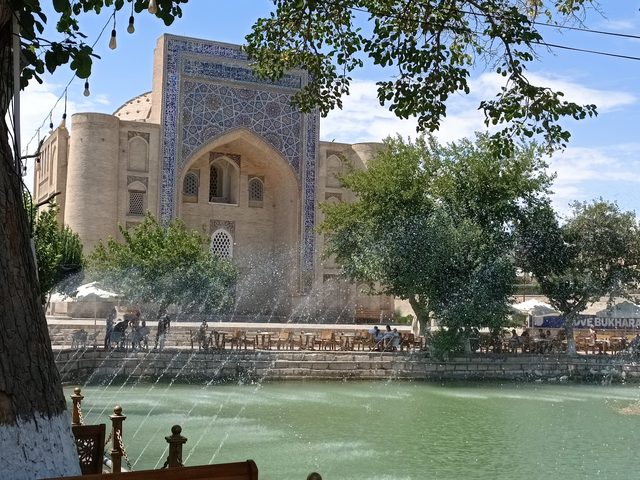
    The liveliest spot in old Bukhara. This 16th–17th-century ensemble grew up around a large pool, the hauz, lined by the Kukeldash Madrasa, the Divan-Begi Madrasa and the Divan-Begi Khanaka. The hauz was the centre of city life: the shade of old trees, a teahouse, townspeople in conversation. There is a lovely legend about a widow whose house once stood where the pool is now. Here too is the statue of Khoja Nasreddin on his donkey, the beloved hero of oriental tales. The ensemble is especially beautiful in the evening.
  2. 2
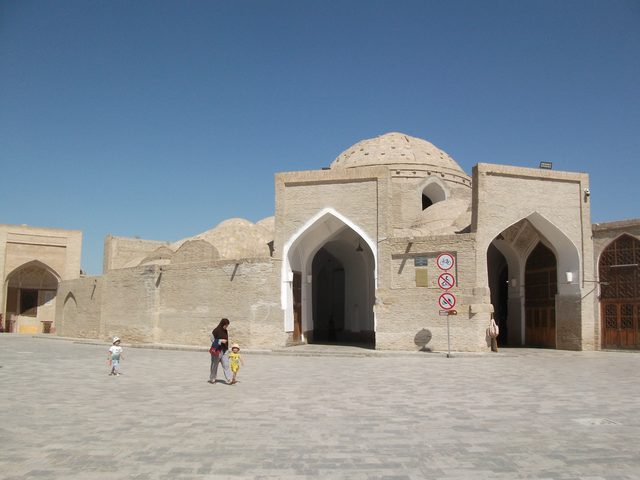
    Toqi Sarrofon Trading Dome

    Toqi Sarrofon Trading Dome

    One of Bukhara’s historic trading domes, built in the 16th century at a crossroads. Money-changers — the sarrafs — worked here, and the dome was part of medieval Bukhara’s famous trading network, one of the most important on the Silk Road. Today the massive dome shelters shops selling souvenirs, crafts and jewellery.

  3. 3
    Magoki-Attori Mosque

    Magoki-Attori Mosque

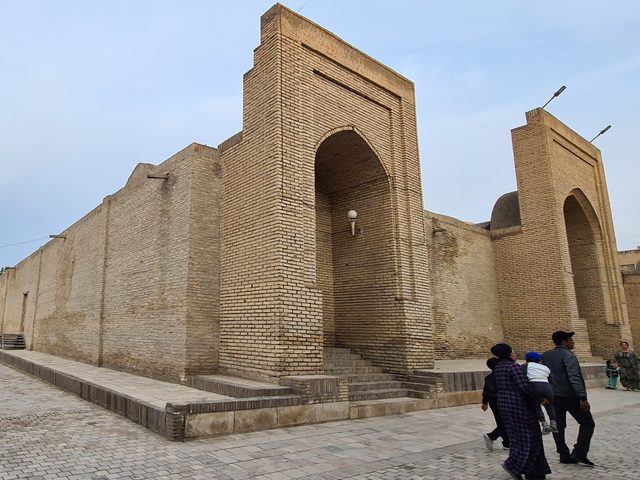
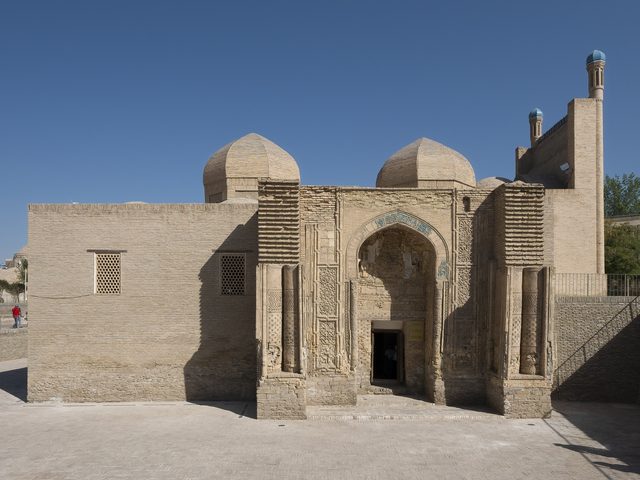
    One of the oldest surviving mosques in Bukhara: the present building dates from the 12th century and stands on the site of an earlier mosque. “Magoki” means “in the pit”: centuries of accumulated earth and sand left the mosque below today’s street level, and it had to be dug out during 20th-century excavations. Legend says spices and medicinal herbs were once sold here (an attar is a “seller of fragrances”). Its richly carved portal is one of the finest examples of medieval architecture. Today it houses a carpet museum.

  4. 4
    Toqi Telpak Furushon Trading Dome

    Toqi Telpak Furushon Trading Dome

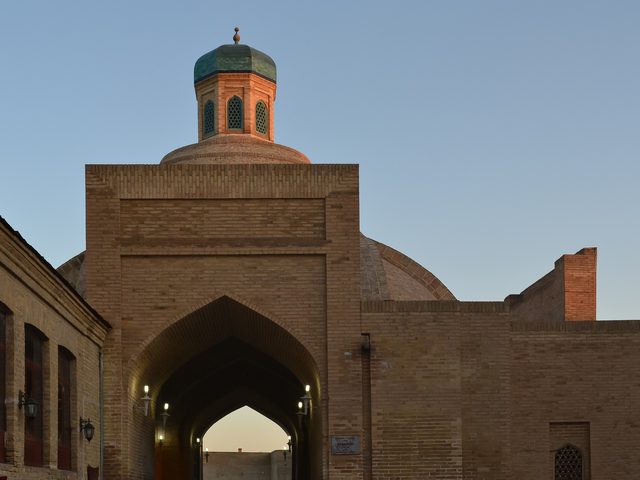
    A 16th-century trading dome where hats were sold: skullcaps, turbans, fur hats and other crafts. The streets converging on the dome form a spacious, cool gallery that was ideal for trade. The massive domed structure survives to this day as a reminder of the bustling commerce that once filled it.

  5. 5
    Kosh Madrasa Square

    Kosh Madrasa Square

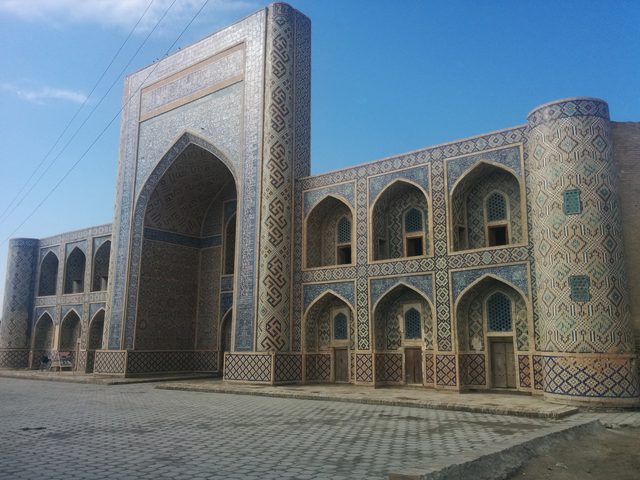
    A paired ensemble: two madrasas, Modari Khan and Abdullah Khan, face each other directly, creating the “double” composition typical of Bukhara. “Kosh” means “double”. Each building stands out in its own way — the shape of the portal, the ornament, the façade decoration. One of the most rewarding spots in the historic centre for anyone who loves architectural detail and tile patterns.

  6. 6
    Tim of Abdullah Khan

    Tim of Abdullah Khan

    A covered 16th-century market built under Abdullah Khan II. Expensive fabrics were sold here — silk, brocade and the work of Bukhara’s craftsmen. Thick walls and domed roofs kept it cool even in fierce heat, so trade went on through the July swelter. Today you can buy textiles, scarves, souvenirs and crafts here while admiring the engineering skill of medieval builders.

  7. 7
    Po-i-Kalyan Square

    Po-i-Kalyan Square

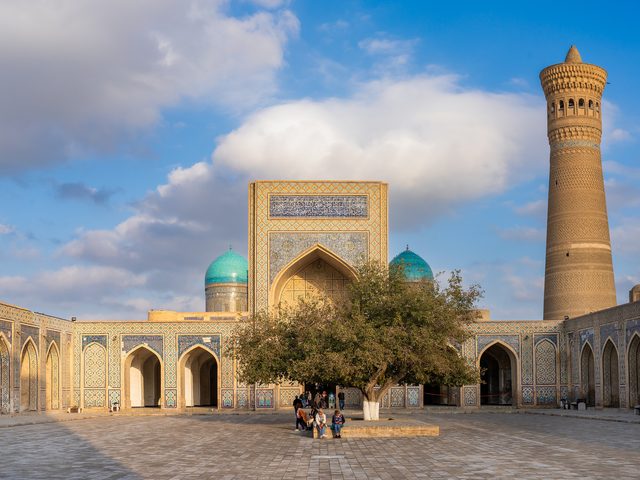
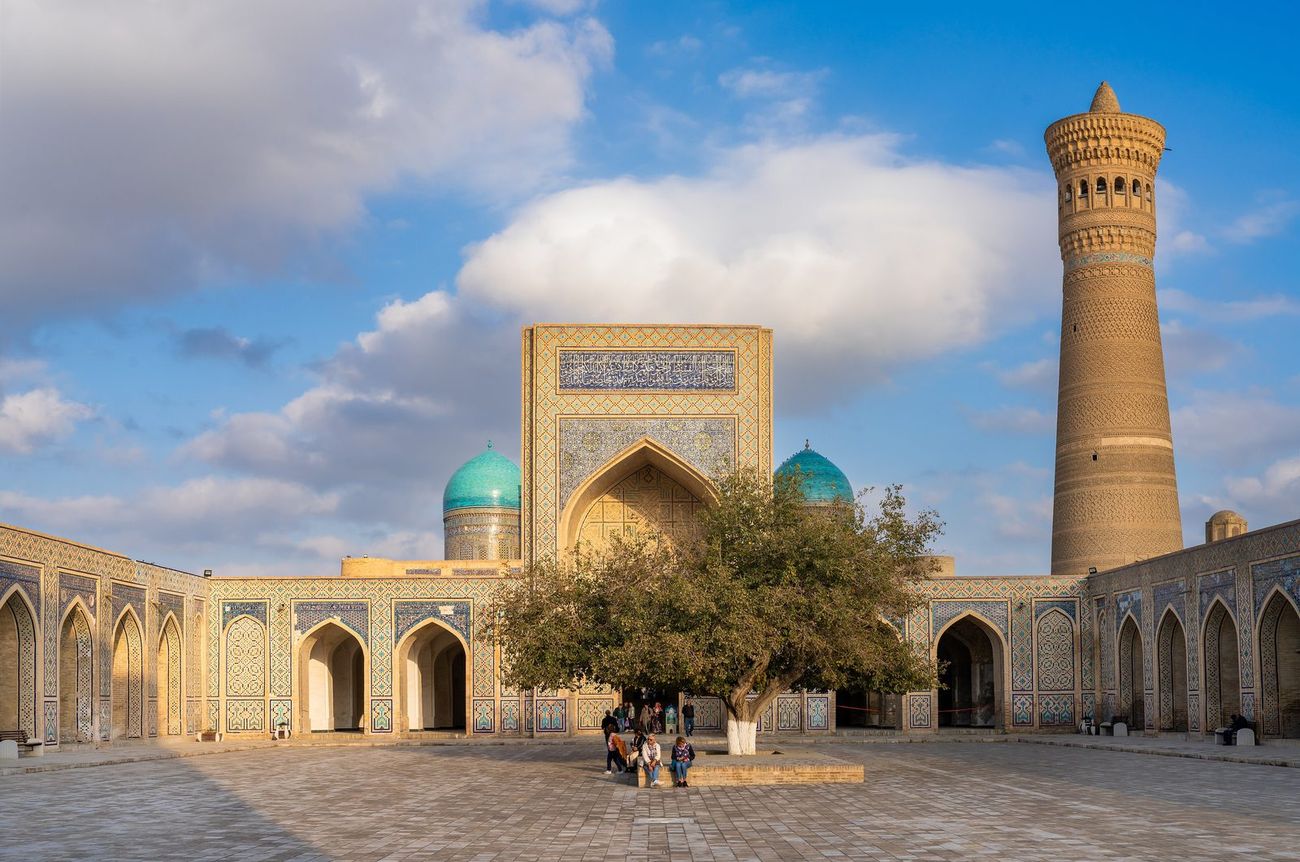
    Bukhara’s main ensemble and one of the best-known symbols of Uzbekistan. The name means “at the foot of the Great One”. It comprises the Kalyan Minaret (1127, about 46–47 metres tall), which, legend says, so impressed Genghis Khan that he ordered it spared when the city was sacked; the early-16th-century Kalyan Mosque, which held thousands of worshippers; and the Mir-i-Arab Madrasa, still a working school. In the evening the lighting makes the minaret especially striking.

    Tip: Mir-i-Arab is a working madrasa, so tourists are usually not allowed inside; the ensemble is best admired from the square.

  8. 8
    Ark Fortress

    Ark Fortress

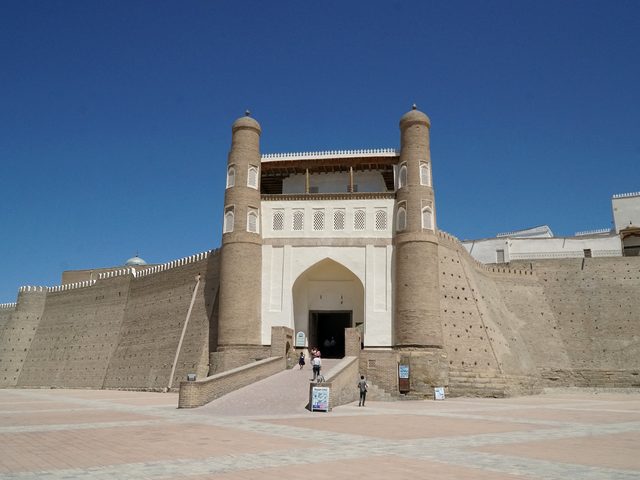
    Bukhara’s ancient citadel, for centuries the residence of the city’s rulers. Behind its massive walls stood palaces, mosques, administrative buildings and living quarters. The fortress is many centuries old; its present appearance took shape mostly in the 16th–18th centuries. It was badly damaged in 1920, but much of it survives. Today it houses museum exhibitions, and the walls offer a view over the old town.

  9. 9
    Bolo-Hauz Mosque

    Bolo-Hauz Mosque

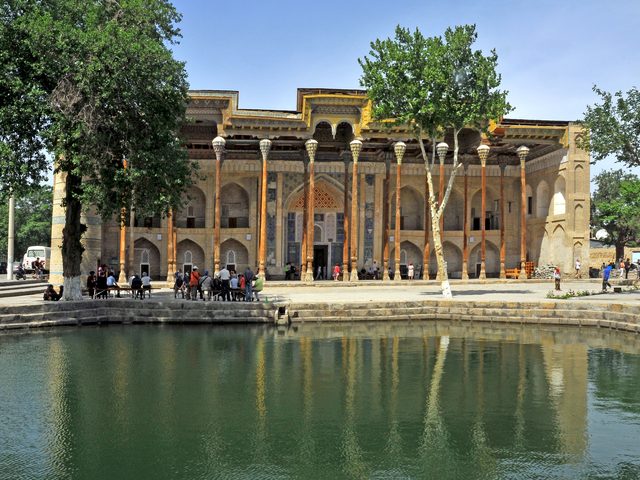
    A historic 18th-century mosque (1712) facing the Ark fortress. Its glory is the open wooden iwan with tall carved columns; reflected in the still water of the hauz, they seem twice as many — hence its other name, “the mosque of forty columns”. For a long time Bukhara’s rulers used it for Friday prayers. A wonderful spot for your last photos of the day.

Otherprogrammes

Swipe

Photos: Lyabi-Hauz Ensemble (CC BY-SA 4.0), Toqi Sarrofon Trading Dome (CC BY-SA 4.0), Magoki-Attori Mosque (CC BY-SA 4.0), Toqi Telpak Furushon Trading Dome (CC BY-SA 4.0), Kosh Madrasa Square (CC BY-SA 3.0), Tim of Abdullah Khan (CC BY-SA 4.0), Po-i-Kalyan Square (CC BY-SA 4.0), Ark Fortress (CC BY-SA 4.0), Bolo-Hauz Mosque (CC BY-SA 4.0) — Wikimedia Commons.